Sound Design Fundamentals for Interactive Media
Understanding the core principles of creating dynamic soundscapes that respond to player actions and environmental changes.
How to compose and implement dynamic music systems that evolve with gameplay, creating emotional depth and player engagement.
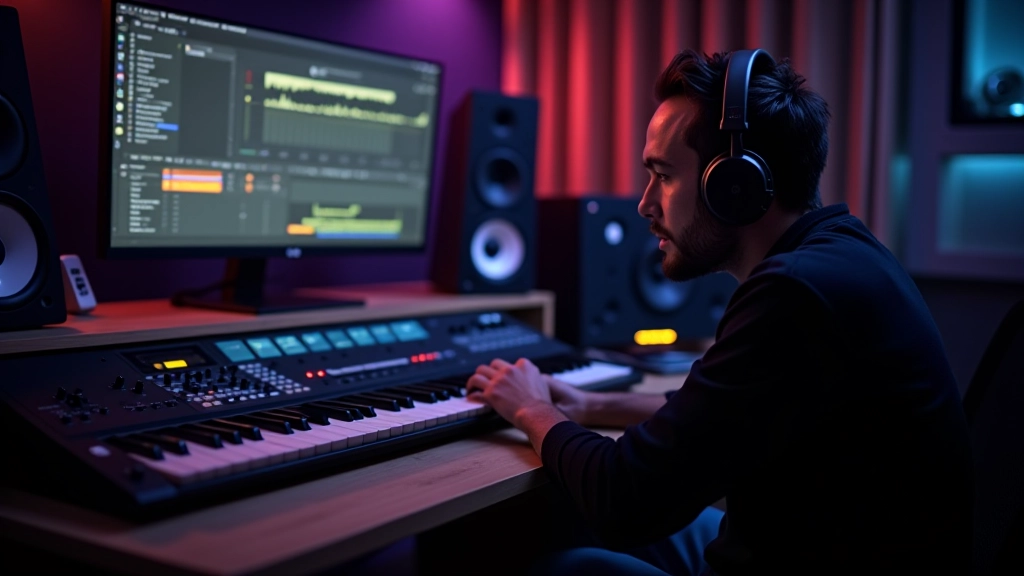
Dynamic music isn’t just background noise—it’s a fundamental layer of player experience. When you’re designing adaptive scoring systems, you’re essentially creating a living soundtrack that breathes with the game. The music responds to what’s happening on screen, shifting intensity, melody, and emotional tone based on real-time gameplay variables.
We’ve seen incredible results when adaptive music is implemented thoughtfully. Games like Journey and Celeste prove that music can communicate narrative and emotion without dialogue. But here’s the thing—it’s not magic. It’s a craft that combines composition skills, technical understanding, and a deep awareness of how sound affects player psychology.

Adaptive music works by layering instrumental tracks that can be mixed in real-time. Instead of one linear piece, you’re creating multiple stems—percussion, strings, synth pads, melodic lines—that blend together based on game state. A calm exploration section might have just ambient pads and soft strings. The moment combat starts, you layer in driving drums and aggressive brass.
The foundation of adaptive music is understanding how your game communicates state. You need clear triggers—health values, location changes, enemy proximity, time pressure. Each trigger maps to musical elements. When the player’s health drops below 30%, the bass becomes more prominent and the tempo increases by 10-15 BPM. When they enter a safe zone, the strings swell and percussion softens.
We typically work with 4-6 parallel tracks per music section. This gives you flexibility without creating overwhelming complexity. Each track is composed to work independently but sound cohesive when mixed together. Think of it like orchestration—the strings can exist alone as atmospheric support, but they’re specifically written to complement the drums and synths when those layers activate.
Adaptive music requires middleware—tools like Wwise or FMOD that sit between your game engine and audio files. These systems handle real-time mixing, parameter mapping, and synchronization. You can’t do this with simple linear audio playback. The middleware is what makes dynamic music actually possible, so factor that into your production timeline and learning curve.
When you’re composing for adaptive systems, you’re thinking differently than traditional film scoring. Your melodies need to work in fragments. A 16-bar phrase might loop 20 times, so it can’t have elements that feel repetitive or jarring after the fifth cycle. You’re also composing in isolated elements rather than dense arrangements.
The best adaptive music uses leitmotif—recurring musical themes that represent characters, locations, or emotional states. In a game with 3-4 distinct areas, you might have a core harmonic structure that’s consistent but expressed differently in each region. The boss theme shares harmonic DNA with the area music, creating psychological continuity. This approach keeps your audio workload manageable—you’re reusing and remixing rather than composing completely unique pieces.
Consider a practical example: a 90-second exploration loop composed across 6 stems. The base stems—ambient pads and light strings—play constantly. As the player discovers secrets or approaches objectives, you layer in subtle melodic fragments. When danger approaches, the bass and percussion intensify. You’ve created 15+ minutes of perceived music variation from 90 seconds of core composition.
Don’t rely on intuition when testing adaptive music. You need systematic validation. Create test scenarios where you deliberately trigger state changes in specific sequences. Does the music transition smoothly from exploration to combat? Does it feel natural when you drop from combat back to exploration? Does the music respond appropriately to subtle state changes, or does it feel too chaotic?
We recommend testing with at least 5-10 players watching their facial expressions and listening to their comments. You’ll spot musical timing issues, transition harshness, and emotional mismatches that aren’t obvious to the development team. One simple indicator: players shouldn’t consciously notice the music system working. If someone says “wow, the music just changed,” that’s usually a sign of a transition problem.
This article provides educational information about adaptive music composition and implementation practices in game development. The techniques and approaches described are based on industry standards and documented workflows. However, adaptive music implementation varies significantly depending on your specific game engine, middleware choice, technical constraints, and creative vision. The performance implications, processing requirements, and musical effectiveness of these approaches depend on your unique project parameters. Always test thoroughly with your actual game systems, and consider consulting with experienced audio engineers and game composers for your specific production needs. Adaptive music is a complex discipline, and successful implementation requires both technical knowledge and practical experimentation.
Adaptive music is becoming standard in modern game development because it works. Players feel more immersed when the soundtrack responds to their actions. The emotional impact increases exponentially when music reinforces what’s happening on screen. You’re not just adding audio—you’re creating another dimension of communication between the game and the player.
Start small. Pick one location or one gameplay scenario. Compose 3-4 stems, get your middleware working, and test relentlessly. As you gain confidence, you’ll develop intuition for how music should respond. You’ll understand the subtle interactions between melody, harmony, rhythm, and player psychology. And you’ll create soundtracks that players remember long after they finish playing.
The workshop approach works best—get hands-on with real game engines and audio middleware. Theory matters, but the practical experience of implementing adaptive music, hearing how transitions feel, and adjusting based on playtester feedback—that’s where you truly learn the craft.